The Balcony Has Better Manners: Opera Glasses, Draughts and the Art of the Cheap West End Seat
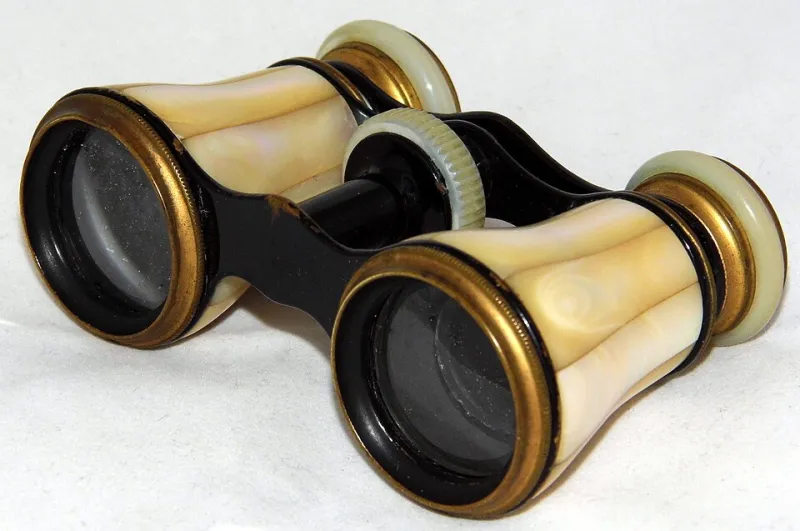
Photo: Joe Haupt from USA, CC BY-SA 2.0, via Wikimedia Commons
There is a particular sound the upper circle makes on a cold November evening. It is the sound of a hundred people settling into velour seats, unzipping coats they regret wearing and shuffling slightly towards the radiators. It is not the sound of the stalls. The stalls rustle quietly and smell of someone else's perfume. The upper circle clatters, whispers, and gets on with it. I have come to prefer it.
Why the Upper Circle Deserves Better PR
Somewhere along the way, the cheap seat picked up a reputation for being the consolation prize — the ticket you buy when the good ones have gone, the place you sit when you love theatre more than you love your bank balance. That is a shame, because the upper circle is where the West End gets honest. You can see the whole stage picture, you can hear the orchestra properly, and you are surrounded by people who actually want to be there rather than people who are there because a client offered them a box.
It is also, and I say this with affection, the best people-watching in London. The upper circle dresses with more nerve than the stalls. Faux fur, good boots, a vintage coat that has clearly been to more first nights than you have. Nobody is performing wealth up there. They are performing taste, which is far more interesting.
The Opera Glasses Question (and Why Binoculars Are Not the Same)
If you are going to sit far away, sit far away properly. A pair of opera glasses — compact, low-magnification, designed to be held in one hand — will change the evening. Standard birdwatching binoculars will not. They are too powerful, too heavy and too obviously designed for a different hobby entirely. You will spend the first act adjusting them and the second act apologising to the person next to you for elbowing them in the ribs.
Aim for three- to four-times magnification. That is enough to read a face without turning the stage into a shaking close-up. Vintage pairs — mother-of-pearl, brass, black enamel, often with a little chain — turn up regularly at Portobello Road, in charity shops in Chiswick and on resale sites for anything from £20 to £80. They are not precision instruments, but they are beautiful objects, and that counts for something in a building with chandeliers.
A word on etiquette: use them for the face, not for the whole show. Resting them on the seat in front, lifting them for a monologue, lowering them for the dance numbers — that is the rhythm. Holding them up for two and a half hours will give you a headache and give the row behind a view of your elbows.
Reading the Room: Sightlines, Pillars and the Polite Peek
Restricted view is not a dirty phrase. It is a description. The trick is knowing what, exactly, is restricted. A pillar that blocks the corner of the set is a mild inconvenience. A pillar that blocks the actor playing the lead is a different proposition entirely. Check the seating plan before you book, and check it again on a site that shows photographs from the actual seat. Theatres are usually honest about this in the booking notes, and if they are not, the reviews on seat-review sites will be.
As a rule of thumb: front row of the upper circle is the sweet spot. You get the rake, you get the legroom, and you get a clear run at the stage with no heads in the way. Back rows are cheaper and warmer, but you are looking through a letterbox, particularly in older houses. Side seats in the upper circle are where the real bargains live, but they come with a genuine trade-off — usually a chunk of upstage, occasionally a chunk of the set, and in the worst cases a view of the wing rather than the action.
The Microclimate Up There: What to Wear When the Balcony Can't Decide
Here is the secret nobody tells you: the upper circle has two climates. The back is warm — sometimes tropically so, particularly in older theatres where the heating rises and settles. The front, near the stairwells and the fire doors, is cold. There is a draught in the Theatre Royal Drury Lane upper circle that could chill a martini.
The answer is layers, and a scarf that doubles as a blanket. A pashmina is ideal; it folds into a bag, it covers the knees, and it looks deliberate rather than defensive. Avoid anything that clanks — stacks of bangles, long earrings, a bag with a metal chain — because sound travels in the gods. And keep the coat light. You will be carrying it on the Tube home.
Theatre-by-Theatre: A Few Notes from the Gods
Theatre Royal Drury Lane: the refurbishment did the upper circle a favour. Front row is genuinely good; the back rows are far but the rake is decent. Take a scarf.
Lyceum: steep. Genuinely, vertiginously steep. If you are not good with heights, take an aisle seat on the front row of the upper circle and do not look down during the interval. The reward is a view that feels almost operatic.
Wyndham's: tight, charming and full of pillars. Check the seat before you book. Some upper-circle restricted views are more restricted than others.
Gielgud: the overhang can clip the top of the set. Front of the upper circle is the safe bet.
Savoy: further away than you think, but clear, and the slope helps. Opera glasses earn their keep here.
Harold Pinter: intimate enough that the upper circle feels like a secret. Good value, good sightlines, no need for the glasses.
Dominion: vast. The upper circle is practically a separate postcode. Bring the glasses or accept that you are watching a very well-lit idea of a musical.
The Interval Shuffle: Etiquette for the Restless
You will notice, about ten minutes into the second act, that the row in front has three empty seats and that one of them is better than yours. Resist. Moving mid-show is a small act of aggression against everyone who has to stand up to let you past. Wait for the interval, ask an usher politely whether the seats are taken, and if the answer is yes, sit back down with good grace.
If you have been accidentally upgraded — it happens, usually because of a seating error or a late cancellation — enjoy it, but do not gloat. And if an usher asks you to move back to your allocated seat, go quietly. The upper circle has long memories.
A Restricted View Is Still a Night Out
The cheap seat is not a compromise. It is a choice, and a good one. You get the same show, the same orchestra, the same curtain call. You get better conversation in the interval, cheaper wine at the bar, and a view of the audience that the stalls will never have. Bring the opera glasses. Bring the scarf. Sit up straight, look down at the stage, and enjoy the fact that you are in a West End theatre on a Tuesday night for the price of a round of cocktails.
That is not a consolation prize. That is a very good evening.