Whiskers in the Wings: The Four-Legged Staff Who Really Run the West End
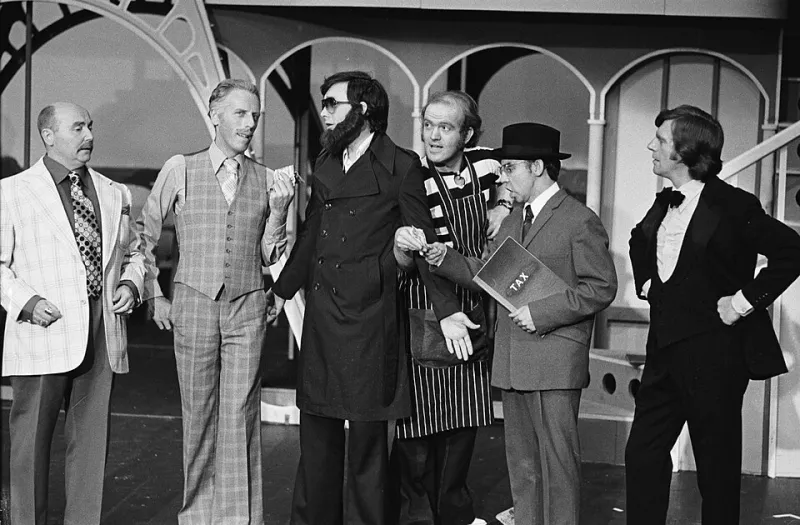
Photo: Geoff Charles, CC BY-SA 4.0, via Wikimedia Commons
Every theatre has a smell. Old wood, dust, hairspray, a faint trace of someone's interval coffee. Some theatres also have a cat.
Not all of them, and not always officially. But walk past the right stage door at the right time and you may meet a small, self-possessed creature who has absolutely no professional interest in the show. The theatre cat is one of the West End's oldest bits of backstage infrastructure, and one of the least documented.
Pest control with a purr
The practical case for a theatre cat is simple: old buildings have mice. A West End theatre is a listed building with a biscuit problem, a props store, a bar, a bin area and about fourteen miles of corridor. Poison and traps have their place, but a cat is quieter, more continuous and considerably better company.
The cat does not need a job description. It patrols. It sits. It listens. It has a knack for finding the one warm patch of floor near a radiator and staying there until the interval. In a building that runs on schedules, the cat is the only member of staff who genuinely does not care what time it is.
The superstition bit
Theatre people are not, as a rule, superstitious. They just have a lot of rituals they would prefer not to disturb. A cat in the building is generally considered good luck, provided it is not doing something alarming on a costume rail. A cat crossing the stage before a matinee is not a crisis; it is a reminder that the stage belongs to someone else for a moment.
There is also the older lore: cats kept the rats out of the granary, the cellar and the pit. Theatres were built on the same principle. A cat in the wings is a small link to the days when the building was more warehouse than palace. It is practical folklore.
Nicknames, feeding rotas and quiet diplomacy
No theatre cat is called 'the theatre cat' for long. It gets a name, then a nickname, then a second nickname used only by the wardrobe department. It may be 'the Fluff', 'the Supervisor', 'Dressing Room 3's chief morale officer' or something considerably less printable.
The feeding is usually unofficial and quietly organised. Someone brings in a tin. Someone else brings in a better tin. A stage door keeper keeps a bowl behind the desk. The company manager pretends not to know. By the second week of a run, there is a rota, and by the third week there is a disagreement about the rota.
This is the bit that never makes the programme. A cat is a small, living reminder that the theatre is not just a machine for putting on a show. It is a workplace full of people who will absolutely reorganise their day around a worried-looking animal.
A city guide to the stage-door cat
You cannot plan to meet a theatre cat in the way you plan to meet a matinee. That is part of the appeal. The best you can do is linger politely near stage doors, keep your distance and never assume the cat wants to be picked up. A theatre cat is a working animal, not a prop. If it approaches you, lovely. If it does not, you have still seen the best bit of the building.
Look for the signs: a bowl near a door, a blanket on an old chair, a staff member saying 'mind the cat' without breaking stride. The cat may be in the foyer, the pass door, the fly floor or the one corridor that smells of coffee and radiators. It may also be asleep in a box of programmes, which is a health and safety issue and also very funny.
The four-legged staff
The West End is full of people who keep the show running: stage management, wardrobe, front of house, maintenance, the lot. The theatre cat is the only one who does it without a lanyard. It is pest control, mascot and quiet company. It is also a reminder that the best backstage stories are usually the ones with no press night.
If you meet one, say hello. Then let it get on with its shift.