Standing Doesn't Mean Standing Ovation: A Gentle Plea for Curtain-Call Sanity
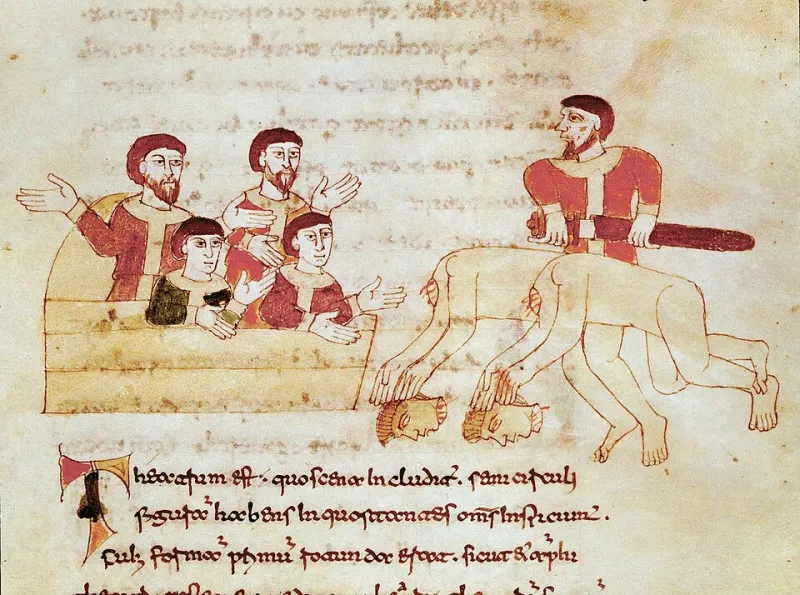
Photo: unknown artist, circa 1022-1032, Monte Cassino, Italy, Public domain, via Wikimedia Commons
I want to be clear from the start: I have leapt up. I have done the standing ovation with my coat still half on, one hand clapping and the other clutching a bag, convinced in that moment that I had witnessed something historic. Sometimes I had. Quite often I was simply the third person to rise and then the rest followed, like pigeons on a wall.
So this is not a scolding. Nobody needs a scolding after a night out. It is a modest proposal, offered with affection, for anyone who has ever sat back down mid-clap feeling slightly ridiculous.
The reflex rise
Watch a curtain call closely and you can almost see the mechanism. The cast come forward, the applause builds, one person in the stalls decides they have had a lovely evening, and then the whole house moves as a single organism. Nobody has judged the show. Nobody has really decided anything. It is the theatrical equivalent of everyone laughing because one person laughed.
The problem is not enthusiasm. The problem is that when every night ends standing, the gesture stops carrying information. A standing ovation used to mean this was exceptional. Now it means the lights have come up.
What we lose when everybody stands
Here is the thing that actually niggles. Somebody on that stage has just done the hardest work of their year — a cover going on at short notice, a lead returning from injury, an understudy who found out at 11am. On a normal Tuesday, they get the same response as everything else. The gesture that should be reserved for them is spent within the first fortnight of a run, and nobody has any currency left.
And the flip side is worse. A show that is fine — pleasant, competently done, not quite there — now has no honest response available to it. You either stand or you look like you're registering a complaint. There is no middle register left in the room.
The pressure of a full house
Add in the audience dynamics and it gets stranger still. Sitting down when the people around you are standing feels like a statement. To stay seated is to commit a small public act of criticism in front of two thousand witnesses, several of whom paid £95 and have had a lovely evening, thank you very much.
Better to stand. Less awkward. And so the thing becomes automatic, and we all go home vaguely aware that we have clapped at rather than for.
The tiers of a curtain call
What gets lost in all this is how brilliantly structured a curtain call actually is. There is a rhythm to it: the ensemble, the supporting turns, the leads, the final sweep. Each step is a cue. Each step deserves its own response.
Which is why some small discernment goes a long way:
- Warm applause is a complete and generous thing. A full house clapping in time, properly, for two minutes, is not a lesser response than a jump to your feet. Some nights it is a better one.
- A partial rise — half the house, a few rows, a wave of people — reads as what it is: genuine, spontaneous, uneven. That is what sincerity looks like.
- The full standing ovation should be a surprise. First previews and press nights will always get one; that is tradition and it is lovely. But if it is a Thursday in week nine, it should still feel like something.
A permission slip
If this article does one thing, let it be this: you are allowed to sit down. You are allowed to clap hard, cheer properly, turn to your friend and say well, that was brilliant — and stay in your seat. Nobody backstage is counting your legs. On stage, honestly, the lights are hot and blinding and the cast can hear the volume, not the geometry.
And you are allowed to stand when you mean it. That is the whole point. The gesture works only if it is chosen.
Small shifts, big difference
The fixes are almost embarrassingly small. Let the first bow land before you decide anything. Clap for the ensemble as loudly as you clapped for the lead — they have been on that set for four hours and they can see you. Save the leap for the night it forces you up, the night you cannot help it, the night you are still thinking about on the bus home.
And when you do stand, mean it. Feel it. Because a room full of people who genuinely cannot stay seated is one of the great sounds of a West End night, and it is worth protecting from becoming background noise.