The Twenty-Minute Scramble: What Really Happens When the West End Takes Its Interval
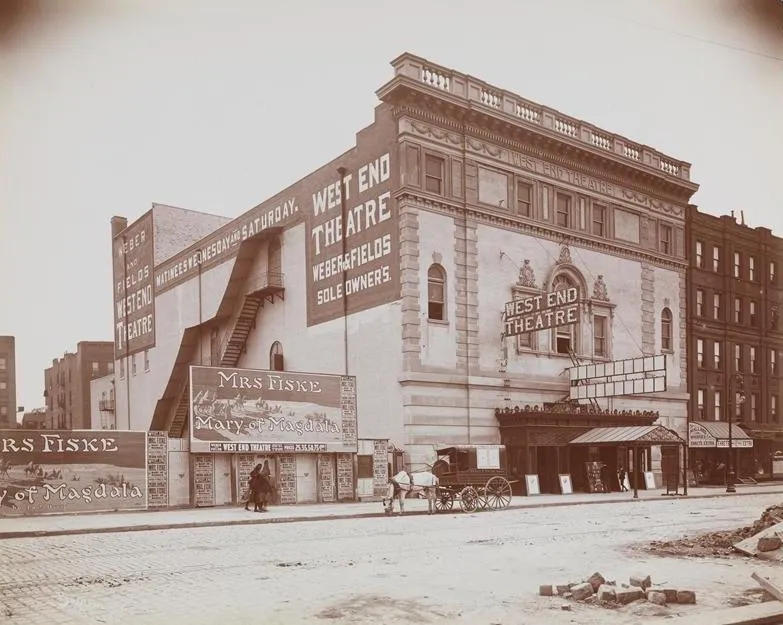
Photo: Byron Company (New York, N. Y.), photographer; Neville & Bragge, architect, Public domain, via Wikimedia Commons
The lights go down on act one, the applause fades, and roughly 1,200 people start doing sums. Can I get a drink? Will I make the loo? Is that the cast board changing already? For the audience, the interval is a 20-minute pause. For the people who work the building, it is the most finely tuned sprint of the night.
I have spent enough evenings loitering by the stalls bar and enough time listening to front-of-house friends to know the truth: the West End interval is a logistics operation wearing a velvet bow.
The bar is already three moves ahead
You queue at 7.45pm for a plastic cup of white wine. The bar team started prepping before the doors even opened. At bigger houses, that means trays of pre-poured pints, rows of gin and tonics with the tonic still capped, and ice buckets set like a military formation. Some bars use interval pre-order schemes — you pay before the show, hand over a token at the break, and skip the scrum. If your theatre offers it, do it. It is not cheating; it is self-care.
The trick is timing. Leave your seat as soon as the curtain drops if you want a drink without missing the first five minutes of act two. Or wait until the initial surge has passed and use the smaller bar upstairs. The main bar is where the queue looks like a school dinner rush. The upper circle bar is where you will find a spare inch of elbow room and a better view of everyone's outfits.
And yes, the ice cream queue moves faster than the bar queue. Always has, always will.
Dressers, quick changes and the two-minute warning
Backstage, the interval is not a break. It is a countdown. Dressers are doing lightning costume tweaks: replacing a torn hem, swapping a shirt that has seen too much sweat, resetting a wig that has slipped. Wardrobe teams have spare buttons, safety pins and lint rollers within arm's reach. A quick change that looks effortless on stage has usually been rehearsed to within an inch of its life, and the interval is when the pit crew checks the machinery.
Stage management calls the half — 35 minutes before curtain up — and the quarter — 20 minutes. But the interval has its own rhythm: five minutes to reset props, ten to check the set, fifteen to get actors back into position. If you see a dresser sprinting past a stage door with a garment bag, do not stop them for a selfie. They are the reason the second act looks expensive.
There is also a quieter kind of work happening. Front-of-house staff are resetting accessible seating, checking the aisles and quietly moving anyone who has had a spill. The bar may look chaotic, but the building is being put back together in real time. It is the least glamorous part of a glamorous night, and it is the part that makes the glamour possible.
Your interval survival plan
- Pre-order your drink if the theatre offers it. If not, buy two at the start of the night and accept that one will be warm by the break. That is the price of freedom.
- Toilet strategy: go before the show, not at the interval. If you must go at the interval, use the upper levels or the accessible facilities away from the main foyer. The stalls queue is a personality test.
- Do not order a pint of lager and a hot chocolate at the same time. The bar staff are fast, but physics is real.
- Keep your ticket or phone handy. Some theatres check you back into the auditorium, and fumbling in a queue is not the vibe.
The glamour is in the people-watching
The interval is also the best free show in the building. You get the couple who have clearly had a row at dinner, the group in matching sequins, the person reading the programme like it is a legal document. You get the quiet thrill of hearing someone else's accent, someone else's perfume, someone else's opinion about act one.
It is a uniquely British ritual: slightly awkward, slightly warm, fuelled by warm white wine and the collective understanding that we are all in this together until the lights go down again. Treat it as part of the night, not a delay. The second act will wait. Your drink will not.